

The Curse of the Salt-Stained Entrance
Every winter, it returns.
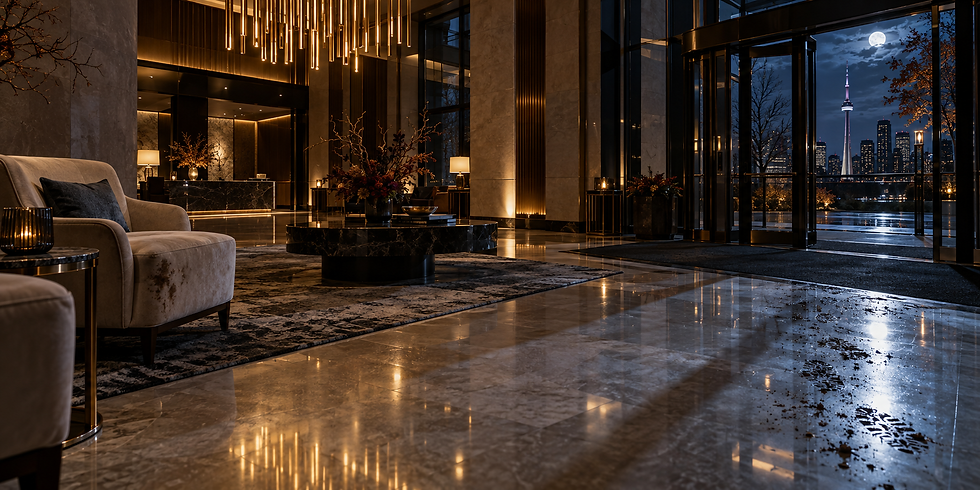
At first, it is just a few white marks near the hotel entrance. Then the marks spread across the lobby floor, into the elevator, and down the corridor. Guests track in snow and slush; the floor dries; someone cleans it; and somehow the white residue appears again.
For hotels across the Greater Toronto Area, road salt can feel like a winter curse. Fortunately, there is a practical way to manage it. The work begins before the first storm.
Follow the footprints
Salt and winter soil rarely stay at the front door. Guests and staff carry them along the routes they use most: from the entrance to the front desk, elevators, meeting rooms, and restaurants.
Walk those routes and note where moisture or residue is likely to collect. Look for places where people step off the entrance mat onto hard flooring or carpet. Check whether the mat covers enough of the path guests actually take.
This quick assessment can help housekeeping and engineering focus their attention where it will have the greatest effect.
Why the white marks keep coming back
A floor can look clean while residue remains on the surface or in grout lines, carpet fibres, and floor edges. As moisture dries, white marks may become visible again.
The answer is not always to mop more often. Using an unsuitable product or leaving dirty solution behind can add to the buildup. Different floor materials also need different care. Stone, tile, grout, and carpet should each be assessed according to the material and its condition.
If an area repeatedly develops white marks despite routine cleaning, document where and when they appear. That pattern can tell you whether the issue is tracked-in salt, moisture that is not being captured at the entrance, or residue that needs more thorough removal.
Give moisture a place to stop
Entrance matting is part of the hotel’s winter maintenance plan. It should help remove debris and absorb moisture before shoes reach the lobby floor.
Check the mats before winter begins. Are they in good condition? Do they lie flat? Do guests walk across them, or can they easily step around them? Is there a process for cleaning and changing them when they become saturated?
Pay attention to the transition beyond the mat as well. A small area of exposed flooring can become the place where moisture and salt first accumulate.
Watch the edges and hidden routes
The middle of the lobby usually gets plenty of attention. Salt residue often becomes more noticeable along grout lines, carpet edges, corners, and the path into the elevator.
Back of house entrances deserve a look too. Staff, deliveries, and equipment can bring winter soil into a property through doors guests never use. Include those routes in the walkthrough so the maintenance plan reflects how the whole building operates.
Make a plan before the first snowfall
October is the time to photograph the current condition of entrance flooring, grout, nearby carpet, and elevator thresholds. Identify areas that already have staining or buildup. Agree on how the team will monitor them during winter and when a deeper cleaning assessment is needed.
That gives hotel leaders a clear starting point. When winter arrives, they can tell the difference between a new problem and one that was already there.
The salt-stained entrance may be a familiar GTA winter story, but it does not have to have the same ending every year. A thoughtful entrance plan, consistent daily care, and attention to the surfaces beyond the front door can help the lobby keep the welcome it was designed to give.
RENUE Systems GTA works with hospitality teams to care for carpets, tile and grout, stone, and other high-traffic surfaces. Learn more at https://renuesystemsgta.com/.


Comments